
The “Boston Tea Party” took place on this date—December 16, 1773…
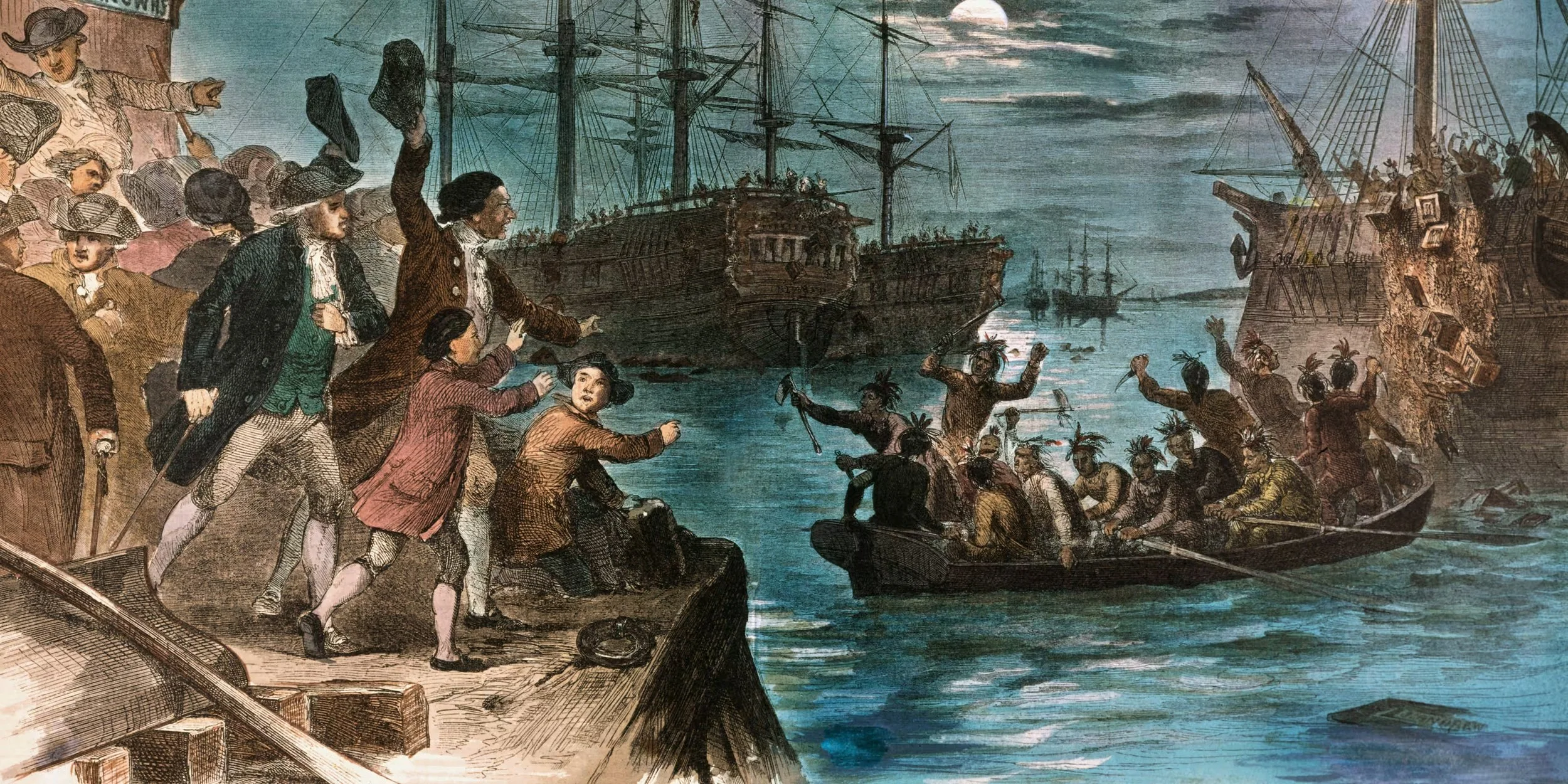
📸 Image from the Bettmann Archive: unopened wooden tea chests of Bohea tea grown in China, shipped to Boston [via England under British East India Company control] December 16, 1773.
Surely I can’t be the only person who’s ever wondered: what kind of tea (—and how much of it?!)—got dumped during that historically significant act of protest. So, for our inquiring minds, I employed a few food-and-drink history sleuthing tactics to find out. You’re welcome.
Ok so several legit historical sources reveal that the bulk of the tea tossed into the harbor was a Chinese black tea known as Bohea (pronounced “boo-hee”—see pic below 👇🏾). The name is believed to be an English-language corruption of the Wuyi Mountains in Fujian Province, southeastern China, where the tea originated. Smoky in both fragrance and flavor, Bohea was so popular in Colonial America that “bohea” became a slang term for tea itself.
Other black teas—including Congou and Souchong—were also tossed overboard, along with smaller amounts of green teas such as Singlo and Hyson, all rebelliously discarded into the harbor…

📸 Depiction of the December 16, 1773 incident showing the disruptors “disguised as “Indians”). Painting by Luis Arcas Brauner (1934–1989)
Oh—and Boston, while the most (in)famous, wasn’t the only harbor where variations of these tea-dumping protests took place. (Key side note: the frivolous-sounding term “tea party” wasn’t attached to these very serious, treasonous acts until a century later in the late 1800s.) Similar acts of protest—rejecting, turning away, or outright dumping taxed tea shipments—were orchestrated by the Sons of Liberty (a secretive colonial resistance group opposing British taxation) in other Eastern Seaboard ports, including Charleston, Philadelphia, New York City, Annapolis, and ports in New Jersey and Maine.
Don’t get me started on how many of those colonial protestors “disguised” themselves as Native Americans (referred to then—and still—as “Indians”)—a choice that raises uncomfortable questions about courage versus cowardice, given that such tactics function to conceal identity, deflect accountability, and shift blame
BACK TO THE TEA PART 🫖….
So anyway: it was all loose-leaf tea, which was the preferred format at the time (as opposed to compressed tea bricks, the other common option). It most certainly was not packaged in individual teabags—which wouldn’t be invented for another 150+ years. Lastly but not least, the estimated value of the destroyed tea would be equivalent to about $1.7 million today.

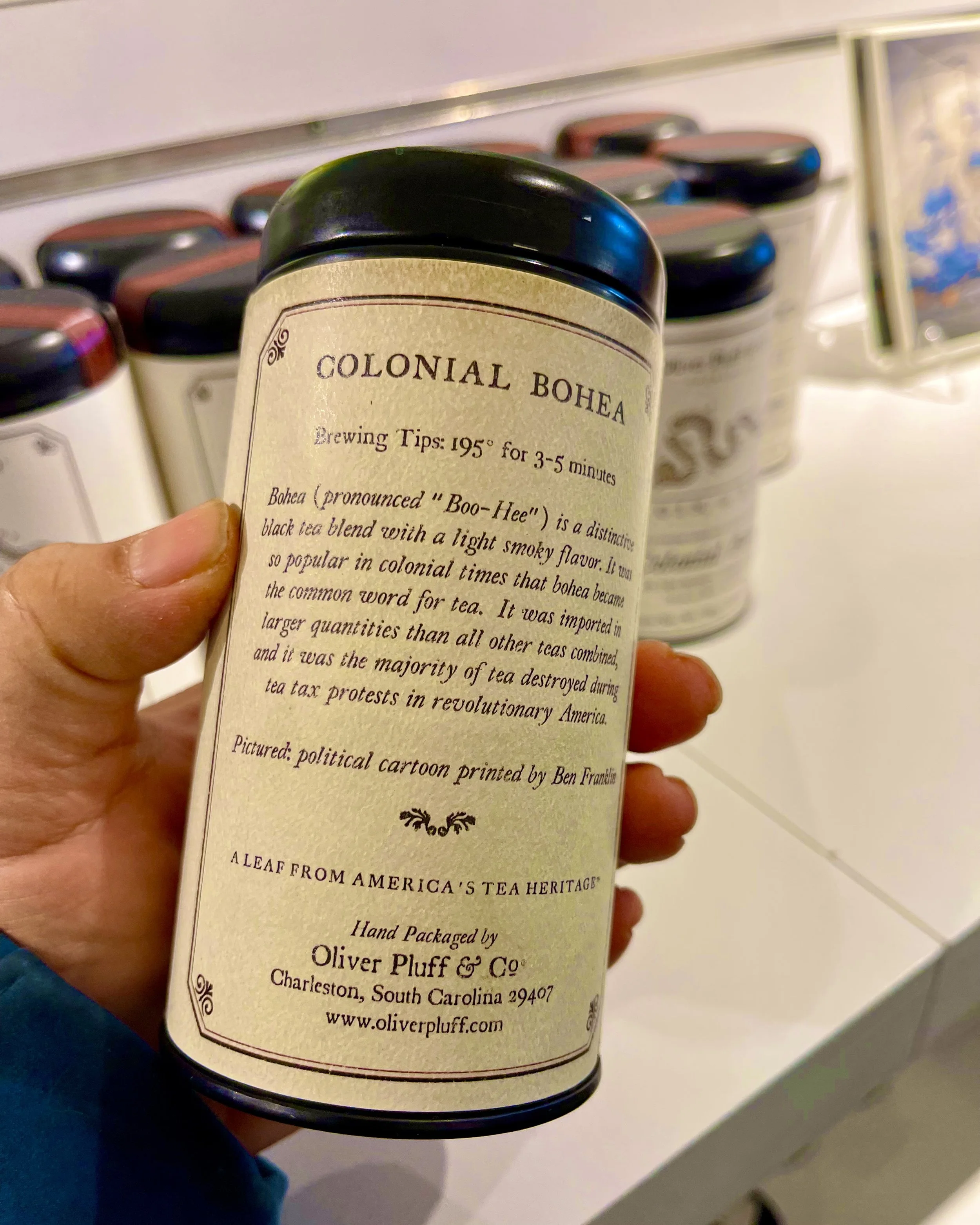


📸 PHOTO GRID ABOVE: “American” Colonial-era tea on display at the Museum of the American Revolution. The tea’s produced by Oliver Pluff & Co. in Charleston, South Carolina. (See also below re: South Carolina being the only place in the U.S. where tea grows successfully…)
🚨🥃🍸🍹🔔TFG DRINKS ALERT ❗️ 🔔🥃🍸🍹🚨
I’ve been brewing up these teas in batches as cocktail building blocks for the Colonial era–inspired drink series I’m developing and launching ahead of America’s 250th in 2026 🇺🇸 …
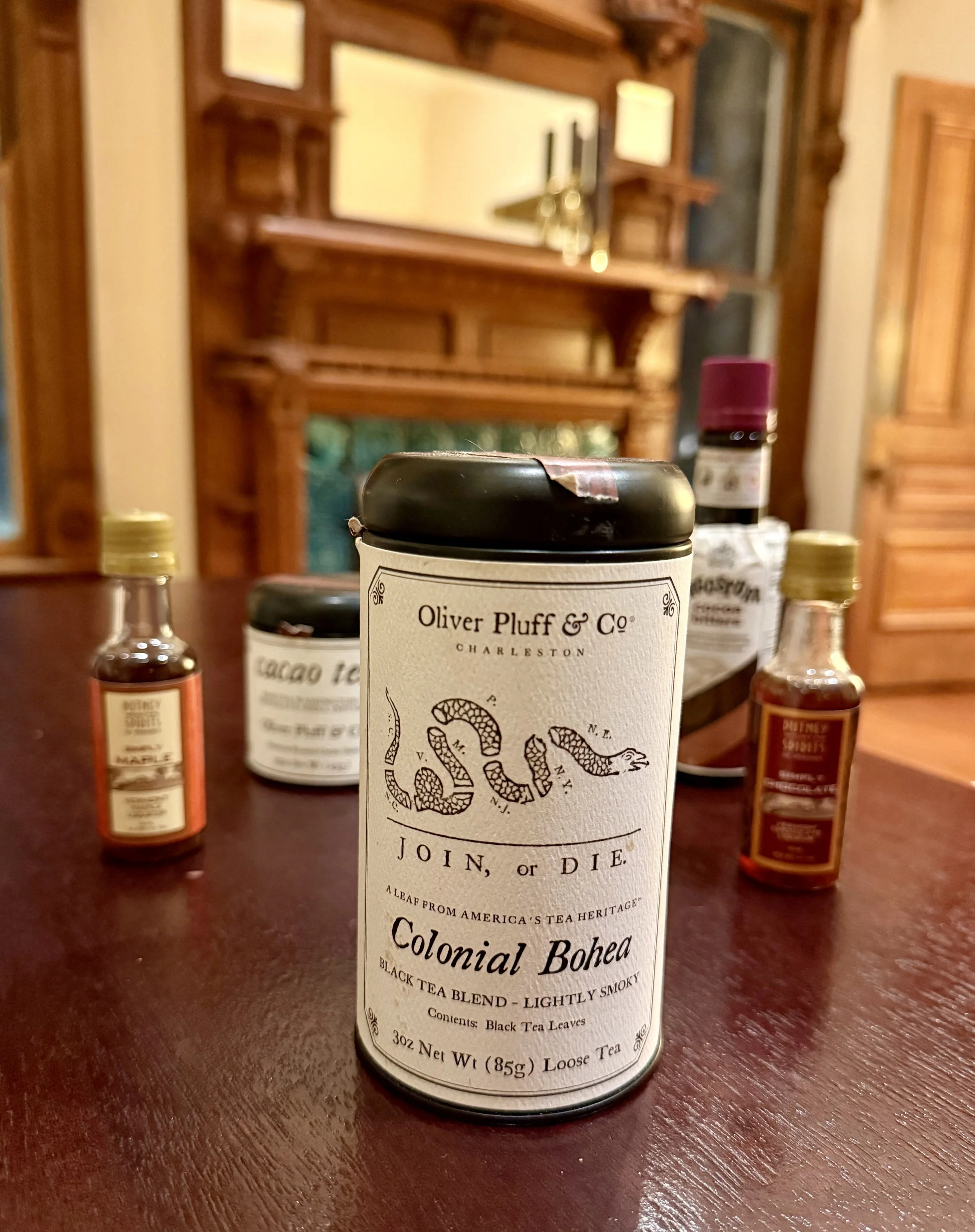
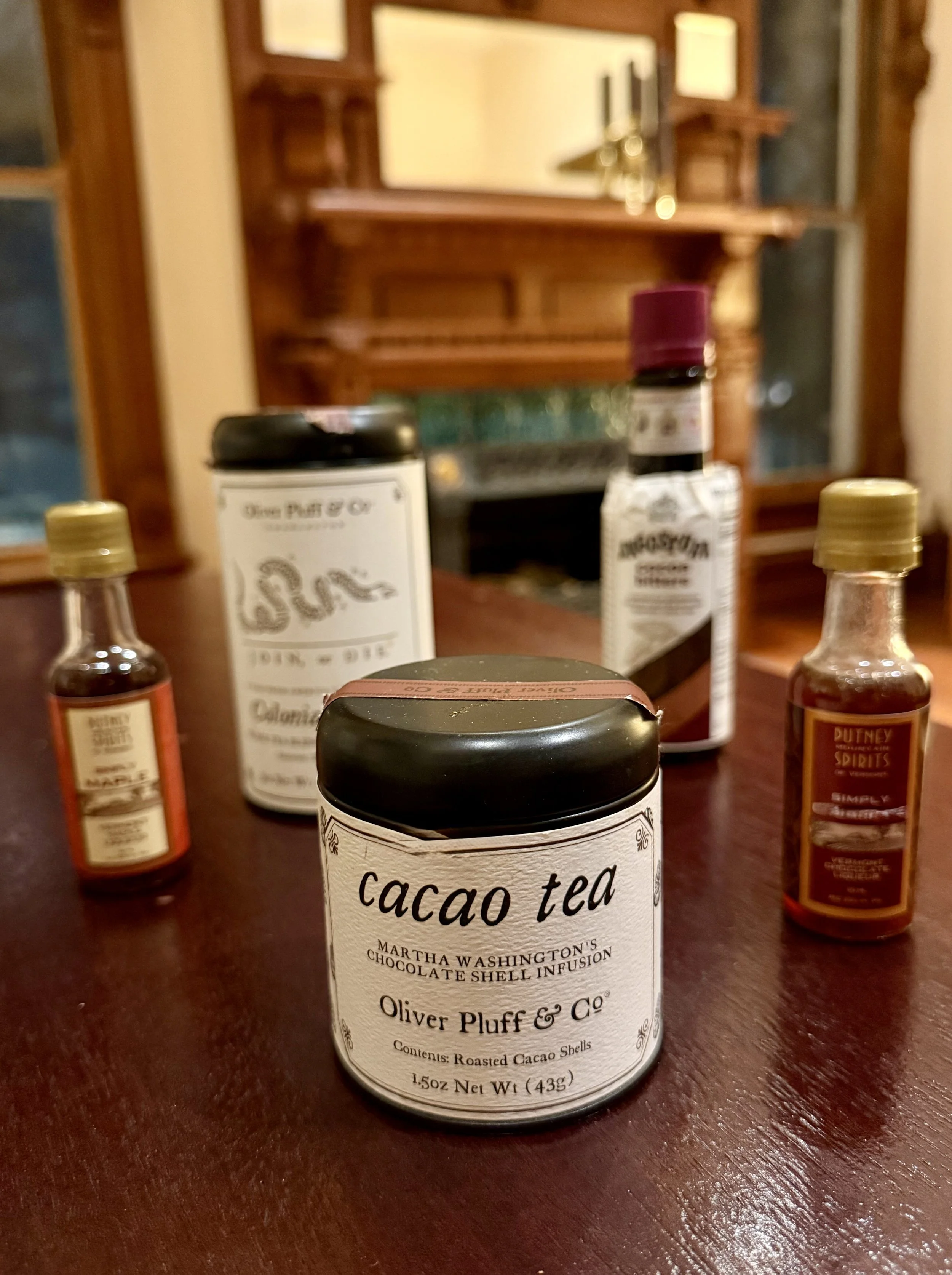
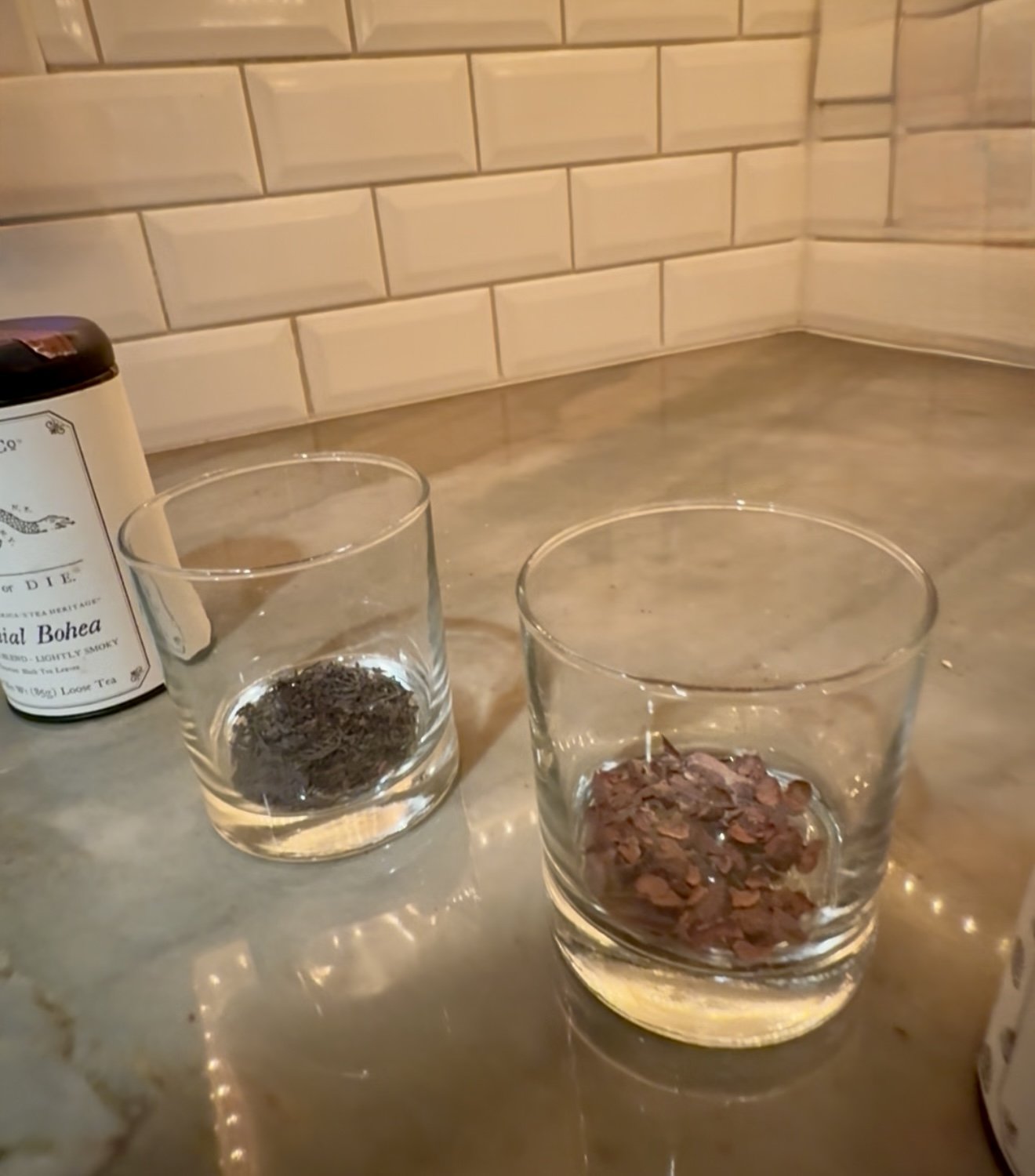
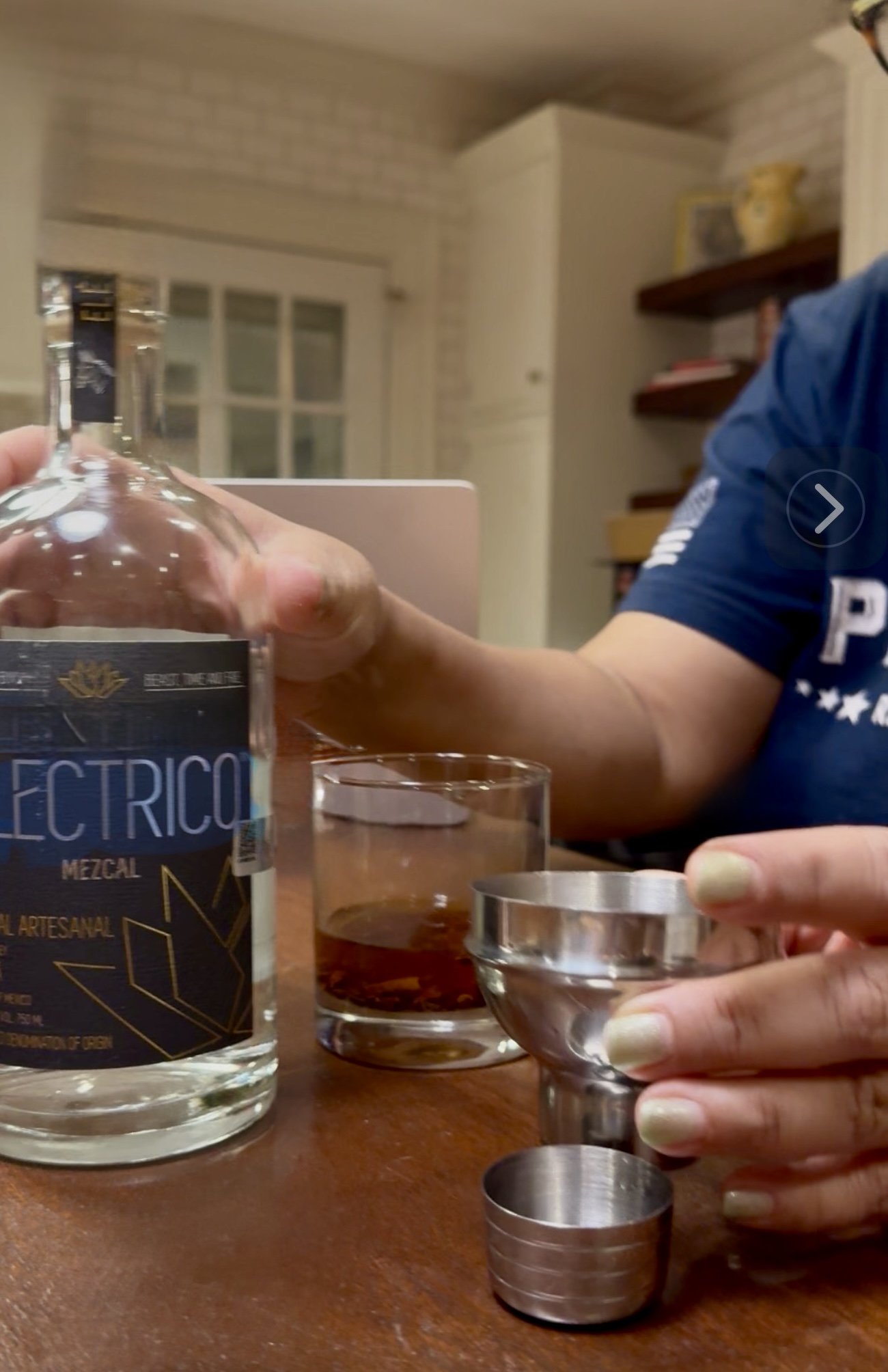

**Retail, Restaurant, and Bar Buyers—plus select Patreon supporters—**will get access to the researched recipes, ingredients, and the storied history informing each pour. Designed to support sales, add value, spark conversation, and elevate customer satisfaction among super-premium spirits appreciators
*****************
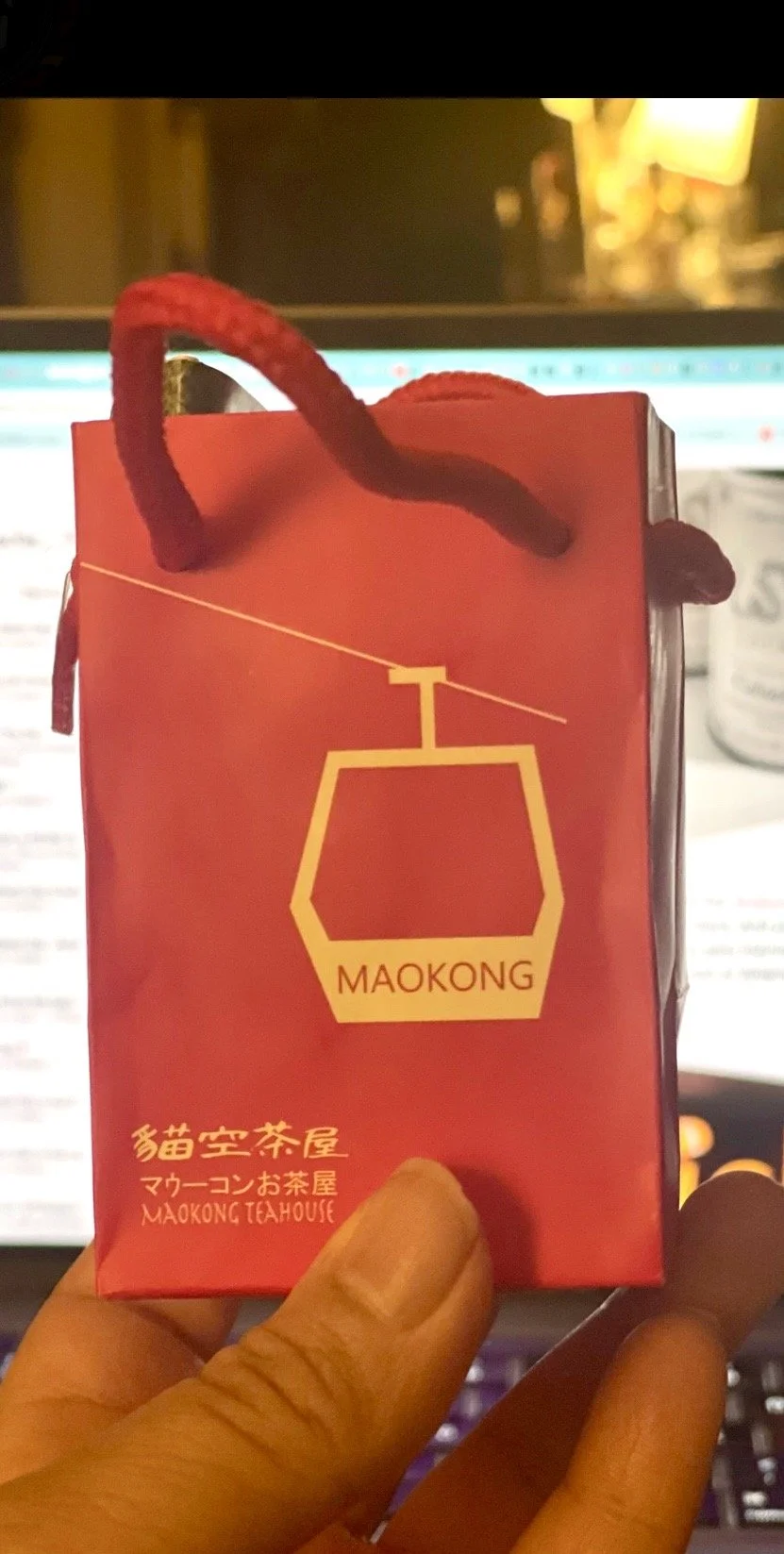
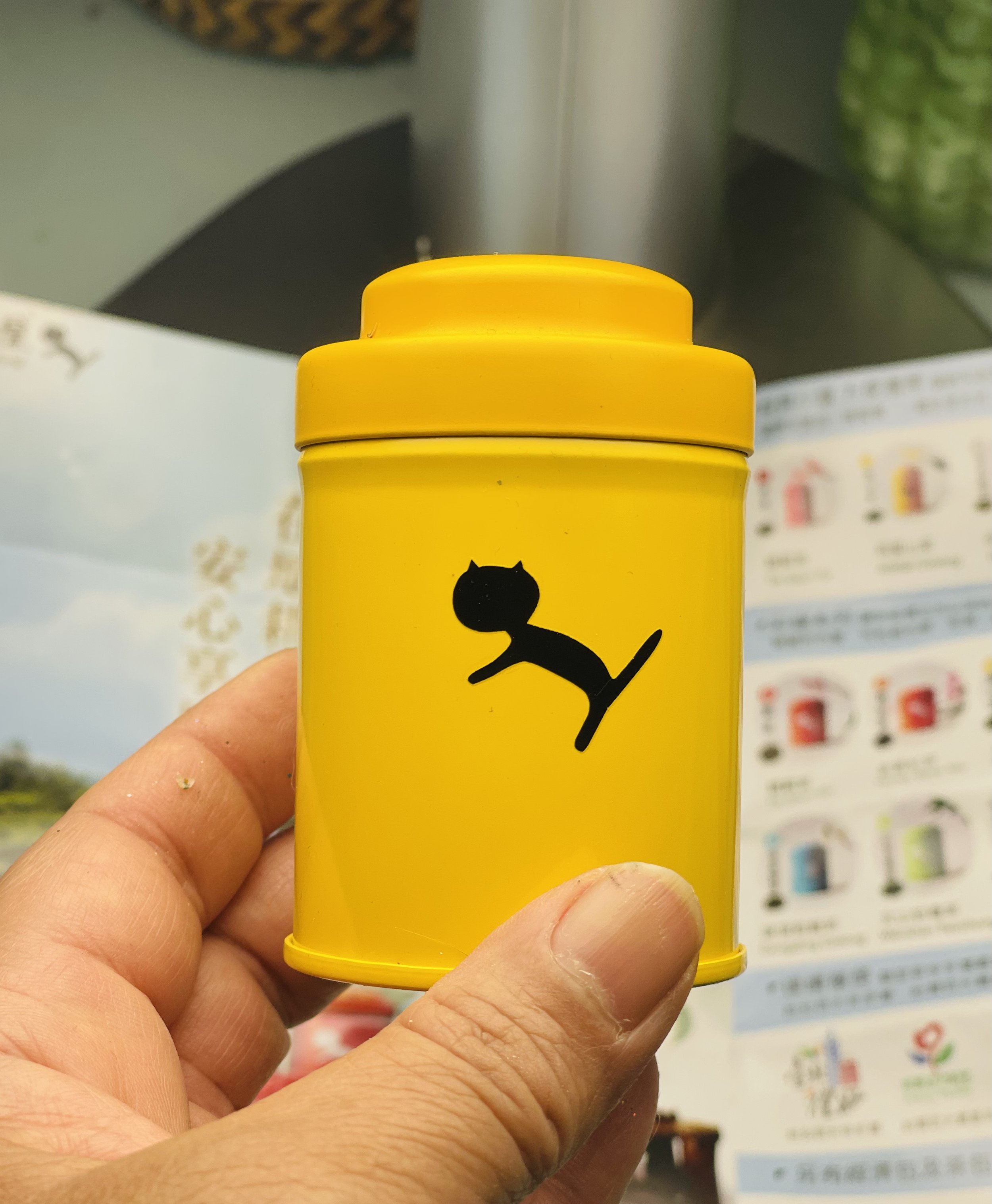
📸 TWO PHOTOS ABOVE: A sip-able souvenir from one of my friend Lily’s family visits to the Maokong Teahouse in Taipei, the capital of Taiwan, Republic of China (ROC).
Speaking of tea from its place of origin—China 🇨🇳—now I’ve gotta revisit this special tea my thoughtful friend Lily brought back from the Maokong Teahouse during one of her family trips to Taiwan 🇹🇼. It’s called Alishan, a famed Taiwanese high-mountain oolong that many consider the “champagne of Taiwan oolongs.” Which makes me wanna say, “Ooh là là!”— a faux French way to say “I’m honored and impressed!” 😁 Thanks, Lily ❣️
Time for a little TFG Time Travel:
Not quite sure why I was surprised to learn, while crafting this post, that the only place in the contiguous United States where Camellia sinensis (TEA) is successfully cultivated is South Carolina—a region with the necessary subtropical microclimates. Tea was first planted there successfully in the early 1800s. Given the time and place, it is most certain that—like all other plantation agriculture in that region then—the labor was performed by enslaved Africans and African-descended Black people.
It’s also worth noting that that is the same geographic region where some of our nation’s earliest and most profitable rice plantations flourished—generating immense wealth within the American slave economy.…
*****************
🎁 GIVE THE GIFT OF THE FOOD GRIOT’S CULINARY (& COCKTAIL!) CREATIVITY TO YOURSELF OR YOUR FAVE FOODIE and/or DRINKS lover THIS YEAR ! 🎁 …[LEARN ➡️MORE ABOUT MY PATREON PLATFORM ⬅️HERE]